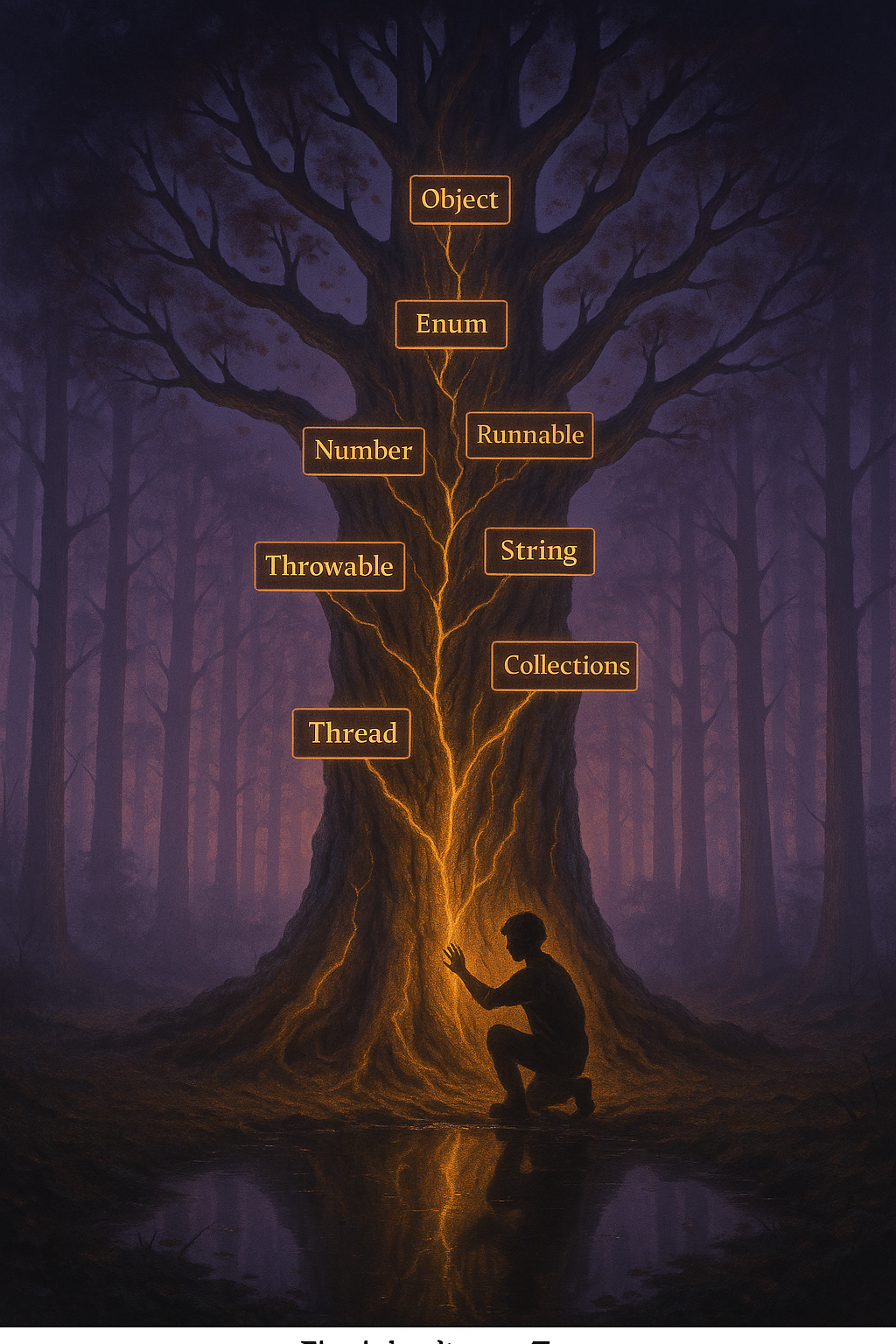
The Inheritance Tree
Java Class Hierarchy Tree Overview
The Java class hierarchy tree is a structured representation of how core Java classes relate and inherit from one another. From foundational classes like `Thread` to functional structures like `Collections`, this tree helps developers understand object-oriented relationships. Moreover, it supports clear coding practices by showing how subclasses derive functionality. In the image, each labeled node—`Enum`, `Runnable`, `Number`, and more—symbolizes a specific building block in Java. Furthermore, the glowing branches suggest inheritance, while the dark forest backdrop contrasts with the clarity provided by the hierarchy. This visual metaphor of growth and connection mirrors Java’s design principles. Additionally, developers use this hierarchy to write maintainable, scalable code. The presence of core classes like `Throwable` and `String` demonstrates how Java organizes exception handling, data manipulation, and threading logic. Therefore, understanding the Java class hierarchy is essential for mastering object-oriented programming in Java.
Key Features of the Java Class Hierarchy Tree
- Visual Inheritance Mapping: The Java class hierarchy tree shows how different classes inherit behavior in a structured manner.
- Core Java Class Emphasis: It highlights essential Java classes like `Thread`, `String`, and `Collections`.
- Educational Visualization: The glowing tree metaphor helps learners grasp abstract OOP principles effectively.
What’s Included with the Java Class Hierarchy Tree
- Clear labels for key Java classes such as `Enum`, `Throwable`, `Runnable`, and `Number`.
- A symbolic tree structure showing branches of class relationships.
- Visual distinction of root classes versus extended ones for better conceptual clarity.
How to Use the Java Class Hierarchy Tree
- Study each branch to understand which classes are abstract, final, or extend others.
- Use this tree as a reference during design and implementation of Java applications.
Ideal Uses and Placement
- Use the Java class hierarchy tree in programming classrooms and Java training sessions.
- Display it in coding bootcamps to support beginner and intermediate learning.
- Place in reference material sections of tech books or documentation hubs.
Explore More Resources
- Find similar products: Products Page
- Gain further insights: Our Blog
- Enhance your understanding: AI & QA Resources
- Learn from experts: Java SE 8 API Documentation
Why Choose the Java Class Hierarchy Tree?
The Java class hierarchy tree helps developers visualize core relationships in Java. It improves understanding, boosts clarity, and simplifies design logic. Moreover, it reinforces object-oriented concepts through an engaging visual format. Whether you’re new to Java or reviewing fundamentals, this tree enhances your coding foundation.
Order Your Java Class Hierarchy Tree Today!
Boost your Java knowledge—explore the Java class hierarchy tree and learn how key classes connect and grow together!
$3.99
- ✅ Instant Download Available
- 🖼️ Ultra High-Resolution 4K PNG + JPG (4096×6144, 300 DPI)
- 🖨️ Prints Beautifully up to 13.6×20.5 inches
- ♾️ Unlimited Downloads
- 🔁 Commercial Use & Resale Allowed
- 💾 Digital Product – No Physical Item Shipped
- 📥 Instant Access via Download Link Post-Purchase
- 🛒 Want a Physical Print?
You can upload your downloaded artwork to services like Printful, Zazzle, or your local print shop to create stunning physical prints.
All 4K images include the label "4K" in their title.
If your selected image does not include "4K", please contact us for your complimentary upgrade.